7 things the VALORANT Champions Shanghai group stage revealed
Need articles like this for your video? They help promote it on YouTube and Google — order them in the Telegram bot @sat_sit_bot. It writes articles around your video, embeds the video and publishes them on popular niche websites (no ads). Try it free: 50 articles on us.
Key takeaways
- VALORANT Champions Shanghai runs September 24 to October 18 and brings together 16 teams from Americas, CN, EMEA and Pacific.
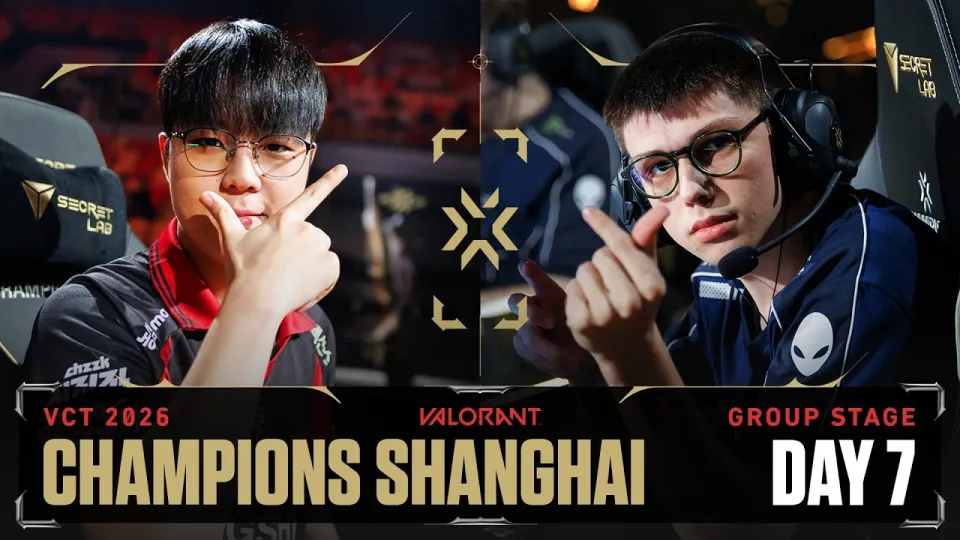
- Day 7 of the group stage is the final day of the opening phase, streamed by the VALORANT Champions Tour channel.
- New champions were crowned at both Masters events in 2026, which reframes the Shanghai bracket.
- The broadcast drew heavy viewer commentary about repeated tech pauses and about CN teams losing eco and 5v2 rounds.
- Official VCT updates and schedules are posted at https://x.com/valorantesports.
VALORANT Champions Shanghai is the 2026 world championship, a 16-team tournament running from September 24 to October 18 where squads from Americas, CN, EMEA and Pacific fight for the year's biggest trophy. Day 7 of the group stage closes the opening phase and decides which teams move on and which go home. Official schedules, brackets and announcements are published by the VCT on the official VALORANT Esports X account.
What the VALORANT Champions Shanghai group stage actually decides
The group stage is the filter between sixteen qualified teams and the playoff bracket. Sixteen teams arrive from four regions — Americas, CN, EMEA and Pacific — and the group phase sorts them by seeding and survival rather than by reputation. Day 7 is the last day of that phase, which is why it carries more weight than any earlier broadcast: results here set the playoff matchups, and a single map can flip a team from a comfortable seed into a brutal first-round draw.
The format rewards consistency over highlight reels. Teams that bank early wins can afford an experimental map pick or a comfort ban; teams that drop their opener are forced into must-win series where a single pistol round decides the tournament. That is the structural reason group stage days feel so tense, and it is the reason Day 7 exists as a distinct broadcast rather than a formality.
New Masters champions changed the seeding math
Two different teams lifted Masters trophies in 2026, and that fact reshapes how the Shanghai group stage should be read. When the same organization wins everything, seeding is predictable. When the title changes hands twice, the group stage becomes a genuine sorting process: regional champions arrive with different preparation windows, different map pools and different levels of international exposure.
The practical consequence is that group stage results in Shanghai are a weaker signal than usual for predicting the playoff winner. A team that looks dominant in a group can still be the third-best team in its own region, and a team that scrapes through on map differential may simply have been saving prepared strategies. The broadcast makes this visible through veto patterns and utility usage more than through scorelines.
Why tech pauses dominated the conversation
The most repeated viewer complaint about Day 7 was the number of technical pauses interrupting the server. Long broadcasts with multiple series and a full production setup — observer feeds, replay systems, player cams, sponsor integrations — accumulate failure points, and each pause resets momentum for players who had just found a rhythm.
For viewers, the practical takeaway is scheduling: a group stage day with several series can run well past its advertised block, and the pause-affected maps are exactly the ones worth rewatching later rather than judging live. For teams, pauses are a tactical variable. A long break after a lost pistol round gives a coach time to reset the call, and a break after a won one can cool a team that was rolling. Neither side gets to choose when the server freezes.
The CN question: eco losses and broken set plays
The sharpest criticism aimed at the Chinese representatives in Shanghai focused on round management rather than raw aim. Losing rounds against eco buys, dropping 5v2 retakes and running out of ideas when a set strategy is read are the three symptoms viewers flagged most often. Those are not mechanical failures; they are economy and mid-round calling failures, and they compound across a series.
An eco loss is expensive twice: it hands the opponent a free round and it forces a buy that distorts the next two. A lost 5v2 usually means the retake was executed without utility discipline or without a clear post-plant plan. And a set strategy that collapses on first contact leaves a team with no fallback, which is exactly what aggressive international opponents scout for. Whether the criticism is fair across the whole region is debatable — one viewer argued that stronger teams from other regions simply did not qualify — but the specific round-level patterns are on the broadcast for anyone to review.
Pacific and EMEA form is the real barometer
The group stage is most useful as a comparison tool between regions, and Day 7 offered clean data on that front. Pacific squads have consistently shown the widest map pools in recent international events, which makes their veto phases harder to exploit. EMEA teams tend to lean on structured defaults and disciplined retakes, trading creativity for repeatability.
That contrast matters in Shanghai because the group stage is where map pools get exposed. A team that can only win on two maps will be banned out in a best-of-five playoff. A team that wins on five maps but loses pistol rounds will still struggle in a best-of-three. Reading the group stage means watching which maps get banned, not just which maps get won.
How to watch and follow VALORANT Champions properly
Following a sixteen-team event across three weeks requires more than opening a stream. The efficient approach is to track the bracket first, then watch the series that actually change seeding, then use the VODs for the maps you skipped. The VALORANT Champions Tour channel publishes the full-day broadcasts, so a group stage day can be reviewed in order without hunting for individual matches.
A short workflow that works:
- Check the current standings and remaining matches before the broadcast starts.
- Identify the two or three series that decide elimination or seeding.
- Watch those live; treat the rest as VOD material.
- Note veto patterns and pistol round conversion for the teams you expect in playoffs.
- Use the official social channels for schedule changes, since tech pauses can shift start times.
Useful links
All official VALORANT Esports channels, copied exactly as listed by the broadcast:
- https://x.com/valorantesports
- https://www.facebook.com/ValorantEsports/
- https://www.instagram.com/valorantesports/
- https://www.tiktok.com/@valorantesports
- https://www.twitch.tv/valorant
What to take from the Shanghai group stage
The group stage in Shanghai is a sorting mechanism, not a verdict: it sets playoff matchups and exposes map pools, but it rarely predicts the champion. The 2026 season already produced two different Masters winners, which means the bracket is open and the seeding matters less than the preparation behind it. Technical pauses and regional round-management gaps are the two stories viewers will remember from Day 7, and both are worth revisiting on the VOD rather than judging in the moment. For schedules, brackets and announcements, follow the official VALORANT Esports X account. This breakdown was built around the Day 7 group stage broadcast from the VALORANT Champions Tour channel, which carries the full run of the event.
Questions & answers
What is the VALORANT Champions Shanghai group stage?
It is the opening phase of the 2026 world championship, where sixteen teams from Americas, CN, EMEA and Pacific play to determine playoff seeding and elimination. Day 7 is the final day of that phase. The event runs from September 24 to October 18.
Why were there so many technical pauses on Day 7?
Long multi-series broadcasts stack many production systems — observer feeds, replays, player cams — and each is a possible failure point. Pauses reset player momentum and can push the broadcast past its scheduled block, so checking official channels for timing updates is worthwhile.
Are CN teams really weaker than other regions at Champions?
The criticism focused on specific patterns: losing eco rounds, dropping 5v2 retakes and running out of options when set plays get read. Those are economy and mid-round calling issues rather than aim. Some viewers argue stronger teams from other regions simply failed to qualify, so the regional verdict is contested.
How should I watch a full group stage day efficiently?
Check standings and remaining matches first, then pick the two or three series that affect elimination or seeding and watch those live. Treat the rest as VOD material and focus on veto patterns and pistol round conversion for teams likely to reach playoffs.
Source: VALORANT Champions Shanghai — Group Stage — Day 7 · Markdown version